
Mleiha Desert Safari Sharjah: The Complete Travel Guide
If you’re looking for a desert experience that goes far beyond the usual tourist trail, a trip to Mleiha in Sharjah might just be the most rewarding adventure you’ll have in the UAE. While most visitors head straight to Dubai’s well-known desert camps, those in the know make the journey to Mleiha — a vast, protected stretch of desert that sits quietly in the interior of Sharjah emirate, carrying with it 125,000 years of human history. This comprehensive guide covers everything you need to know before you go, from how to get there and what to do, to the best time to visit and what to expect upon arrival.
Whether you’re a first-time visitor to the UAE or a long-time resident seeking something genuinely unique, Mleiha Desert Safari offers an experience that is equal parts thrilling and deeply moving. This is not just a dune — it is one of the most archaeologically significant landscapes in the entire Arabian Peninsula, and it is waiting right on Sharjah’s doorstep.
What is Mleiha?
Mleiha is a protected desert region located in the interior of Sharjah emirate, approximately 55 kilometres from the centre of Sharjah city. It forms part of the Mleiha Archaeological and Ecotourism Project, a major initiative launched by the Sharjah government to preserve and share the extraordinary natural and historical heritage of this landscape with the world.
The name Mleiha may not ring the same bells as Hatta or Al Qudra, but among archaeologists, historians, and adventure travellers, it holds an almost legendary status. Excavations carried out across the region have uncovered evidence of continuous human settlement dating back over 125,000 years, making it one of the oldest known inhabited areas in the Arabian Peninsula. The site has yielded Bronze Age tools, Iron Age tombs, ancient coins, pre-Islamic petroglyphs, and even the fossilised remains of marine creatures that swam these waters 80 million years ago — long before this land became a desert.
In 2016, Mleiha was submitted by the UAE as a candidate for UNESCO World Heritage Site status, a recognition of just how significant and irreplaceable this landscape truly is.
Where is Mleiha and How Do You Get There?
Mleiha is situated in the eastern interior of Sharjah, tucked between the city and the Hajar Mountain foothills. Despite its remote feel, it is surprisingly accessible from both Sharjah and Dubai.
From central Sharjah, the drive to Mleiha takes approximately 45 minutes via the Emirates Road (E611), heading southeast toward the desert. From Dubai, the journey is around 60 to 70 minutes, depending on your starting point and traffic conditions. The roads are well-maintained and clearly signposted, and the final approach into Mleiha offers a dramatic transition from urban highway to open desert that sets the mood perfectly for what lies ahead.
If you are booking through a tour operator such as Sharjah Desert Safaris, your pick-up and drop-off is handled for you — you simply need to be ready at your home, hotel, or apartmen,t and your driver will collect you and return you at the end of the evening. This is by far the most convenient option, particularly if you are unfamiliar with the area or visiting the UAE for the first time.
For those driving themselves, the Mleiha Archaeological Centre serves as the main entry point and visitor hub for the region. Parking is available on site, and the centre provides maps, guides, and context for everything you will see in the surrounding desert.
The Landscape of Mleiha: What Makes It So Special?
Mleiha is unlike any other desert landscape in the UAE. While Dubai’s Lahbab desert is famous for its towering red dunes, and Abu Dhabi’s Liwa is known for its vast, sweeping erg, Mleiha offers something different entirely — a layered, complex landscape where dramatic sand dunes sit alongside ancient rock formations, fossilised cliffs, dry wadis, and archaeological sites that span multiple civilisations.
The dunes at Mleiha are golden to amber in colour, rising and falling across the landscape in long, rolling ridges that are ideal for dune bashing and buggy driving. The desert here feels genuinely wild and unspoiled — far removed from the commercialised camps that line the tourist routes out of Dubai. Because Mleiha sits within a protected national park, development is tightly controlled, which means the landscape retains an extraordinary sense of space, silence, and authenticity.
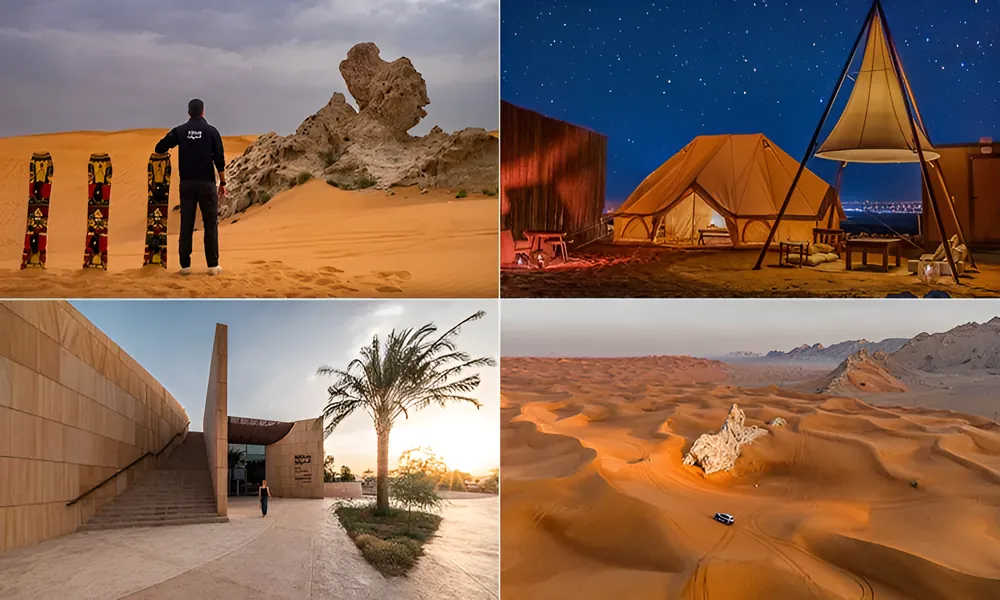
The rock formations are another defining feature of the Mleiha landscape. Fossil Rock — known locally as Jebel Maleihah — rises abruptly from the desert floor as a weathered limestone ridge, its surface embedded with the fossilised remains of marine animals including sea urchins, corals, and shells. Standing here, surrounded by dry sand and blue sky, while holding an 80-million-year-old fossil in your hand is one of those genuinely humbling moments that travel occasionally delivers.
Camel Rock is another icon of the Mleiha landscape — a natural sandstone formation that, through centuries of wind erosion, has taken on the unmistakable shape of a crouching camel. It is one of the most photographed natural landmarks in Sharjah and makes for an extraordinary backdrop at sunrise or sunset.
Mleiha’s Archaeological Heritage: A Journey Through 125,000 Years
What truly sets Mleiha apart from every other desert destination in the UAE is the depth and breadth of its archaeological record. This is not ancient history that has to be imagined — it is history you can walk through, touch, and see with your own eyes.
The oldest evidence of human presence at Mleiha dates back to the Middle Stone Age, approximately 125,000 years ago, when early humans are believed to have passed through this region as part of the out-of-Africa migration. Tools and artefacts from this period have been found scattered across the desert floor, offering a remarkable window into the lives of our earliest ancestors.
Moving forward through time, Mleiha was an important settlement during the Bronze Age (around 3000 to 1300 BCE), when communities here were involved in trade networks that stretched across the ancient world. Excavations have revealed pottery, metalwork, and the remains of mud-brick structures from this period, suggesting a thriving and sophisticated society.
The Iron Age tombs at Mleiha are among the most impressive archaeological features of the site. These beehive-shaped stone structures, known as tower tombs, dot the desert landscape and date back approximately 2,500 years. Walking among them, surrounded by the silence of the open desert, is a powerful and contemplative experience unlike anything else in the UAE.
Perhaps most dramatically, excavations at Mleiha have uncovered evidence of a major battle fought here during the Arab revolt against the Sassanid Persian Empire in the third century CE — a conflict that left behind a remarkable collection of weapons, horse armour, coins, and personal artefacts that are now displayed at the Mleiha Archaeological Centre.
The Mleiha Archaeological Centre
Before heading out into the desert, a visit to the Mleiha Archaeological Centre is strongly recommended. The centre serves as the educational and cultural heart of the Mleiha experience, housing an impressive collection of artefacts recovered from the surrounding landscape.
Displays cover the full sweep of Mleiha’s history, from the earliest Stone Age tools through to Bronze Age pottery, Iron Age weapons, and items from the pre-Islamic and early Islamic periods. The exhibits are well-presented and thoughtfully curated, offering genuine context that makes everything you see out in the desert far more meaningful and moving.
The centre also offers guided tours of the surrounding sites, as well as interactive experiences for younger visitors. It is open to both independent visitors and tour groups, and admission is included in most organised safari packages from Sharjah.
Things to Do at Mleiha Desert
Mleiha offers a remarkably diverse range of activities that cater to everyone from adrenaline seekers to history lovers, families, and photographers. Here is a detailed look at what you can expect.
Self-Drive Dune Buggy Experience
The headline activity at Mleiha — and the one that most visitors remember longest — is the self-drive dune buggy experience. Unlike the dune bashing offered at most Sharjah and Dubai desert camps, where you are a passenger in a 4×4 driven by someone else, at Mleiha you actually take the wheel yourself. The buggies are high-performance, purpose-built off-road vehicles capable of climbing and descending even the steepest dunes with ease. They are automatic and beginner-friendly, meaning no experience is necessary. An expert guide leads the convoy and sets the pace, ensuring the experience is both thrilling and completely safe. Sessions typically run for one hour and cover a significant stretch of the surrounding desert, with stops for photographs and to take in the views.
Dune Bashing
For those who prefer to leave the driving to someone else, traditional dune bashing in a 4×4 is also available at Mleiha. Skilled drivers navigate the rolling dunes at speed, offering the heart-pounding combination of steep climbs and fast descents that desert safari visitors love. The dunes at Mleiha are well-suited to this activity, with enough height and variety to keep even experienced desert visitors entertained.
Fossil Rock Visit
A guided visit to Fossil Rock is one of the highlights of any Mleiha desert trip. Your guide will lead you to the base of this extraordinary limestone ridge and point out the fossilised marine remains embedded in its surface. You will learn about the geological history of the region and how this land that is now dry desert was once the floor of an ancient ocean. It is an educational experience that also makes for incredible photographs.
Camel Rock and Scenic Viewpoints
Camel Rock is a short drive from Fossil Rock and should not be missed, particularly around sunrise or sunset when the light catches the sandstone in extraordinary ways. The wider Mleiha landscape is full of similarly dramatic viewpoints, and your guide will know the best spots for photography at different times of day.
Camel Riding
Camel riding is included in most Mleiha safari packages and offers a wonderfully traditional counterpoint to the more modern thrill of the dune buggy. A short guided camel ride around the camp gives you a taste of the ancient mode of transport that has carried people across these desert for thousands of years.
Sandboarding
Sandboarding — essentially snowboarding but on sand dunes — is included in most packages and is particularly popular with younger visitors and families. The dunes around the Mleiha camp offer good runs for beginners, and boards are provided. It requires no prior experience and is a genuinely enjoyable activity for all ages.
Henna Painting and Arabic Dress Photography
At the desert camp, traditional henna artists are on hand to paint intricate designs on your hands and arms — a beautiful cultural experience and a lasting souvenir of your evening in the desert. Arabic dress is also available for photographs, giving you the chance to dress in traditional Emirati robes and capture the moment against the backdrop of the desert at sunset.
Private Emirati Dinner Under the Stars
Dining in the desert at Mleiha is a genuinely special experience. The camp sets up a private dinner spread featuring authentic Emirati and Arabic cuisine — grilled meats, slow-cooked stews, fresh salads, rice dishes, breads, and desserts — with generous vegetarian options available. You dine in the open air, under a sky that, away from the city light pollution, blazes with stars in a way that most people rarely get to see. Arabic tea, coffee, and soft drinks flow freely throughout the evening, and the pace is unhurried and completely relaxed.
Stargazing
Because Mleiha sits within a protected area far from the light pollution of Sharjah and Dubai, the night sky here is remarkable. On a clear evening, the Milky Way is clearly visible to the naked eye, and the number of stars visible is something that regularly stops visitors in their tracks. Bring a camera with a long exposure setting if you want to attempt astrophotography — the results can be extraordinary.
Overnight Glamping
For those who want to extend the experience beyond a single evening, overnight glamping is available at Mleiha. Luxury tents are fully equipped with comfortable beds, bedding, and basic amenities, allowing you to fall asleep under the desert sky and wake up to a freshly prepared breakfast in the dunes. This is one of the most peaceful and memorable ways to experience the Mleiha desert and is especially popular with couples and small groups.
Wildlife at Mleiha
Mleiha is not just a landscape of rock and sand — it is a living ecosystem that supports a surprising variety of wildlife. Because the area is protected, animals here exist largely undisturbed by human activity, and patient visitors are regularly rewarded with sightings that are rare elsewhere in the UAE.
The Arabian oryx, once extinct in the wild and now recovering thanks to conservation programmes, can occasionally be spotted in the open desert around Mleiha. Desert foxes are more commonly seen, particularly around dusk and dawn when they emerge to hunt. Various species of desert birds — including eagles, falcons, and desert larks — can be spotted throughout the day, and the rare Arabian sand gazelle has also been recorded in the region.
The plant life at Mleiha is equally fascinating. Hardy desert species including ghaf trees, date palms, and a variety of drought-resistant shrubs and grasses have adapted to survive in this extreme environment, and guided nature walks can reveal a surprisingly rich botanical landscape to those who look closely.
Best Time to Visit Mleiha
The desert climate at Mleiha is extreme in summer, with temperatures regularly exceeding 45 degrees Celsius between June and September. Visiting during these months is strongly discouraged unless you are doing an early morning activity and returning before midday.
The ideal window for visiting Mleiha is between October and April, when daytime temperatures are comfortable and evenings are pleasantly cool. This is the peak season for desert tourism in the UAE, and the weather during these months is genuinely beautiful — warm enough to enjoy the outdoors, cool enough to be comfortable even during physical activities.
March and April can occasionally see brief desert rains, which transform the landscape temporarily and bring a flush of wildflowers to the desert floor — a rare and magical sight.
November through February is generally considered the best overall time to visit, offering the most reliably comfortable conditions for all activities including dune buggying, fossil rock visits, and outdoor dining.
What to Wear and Bring
Dressing appropriately for a desert safari at Mleiha will make a significant difference to your comfort and enjoyment. Here is what we recommend.
Closed-toe shoes are essential if you are planning to drive a dune buggy. Sandals and open shoes are not permitted for buggy driving for safety reasons. Comfortable trainers or lightweight hiking shoes are ideal.
Lightweight, breathable clothing is best for the active parts of the tour. Loose-fitting trousers and a light long-sleeved top offer good sun protection without being uncomfortable. In the cooler months, a light jacket or fleece is recommended for the evening, as desert temperatures can drop quickly after sunset.
Sunglasses and sunscreen are essential at any time of year. The desert sun reflects intensely off the sand, and even in winter the UV exposure is significant.
A valid photo ID is required for buggy driving. Bring your passport or Emirates ID.
A camera or smartphone with a good camera is strongly recommended. The landscapes, light conditions, and activities at Mleiha offer exceptional photographic opportunities throughout the day and evening.
Tips for First-Time Visitors
Go in the evening if you can. The combination of the golden hour light, the buggy experience, the camp dinner, and the stargazing makes the evening safari the definitive Mleiha experience. Morning safaris are beautiful but the evening offers more variety and atmosphere.
Book in advance, particularly between November and February when demand is highest. Weekend slots fill up quickly, especially for groups.
Visit the Archaeological Centre first if you can. Understanding the history of the landscape before you venture into it makes the experience significantly richer and more meaningful.
Take your time at Fossil Rock. It is easy to rush past it as just another photo stop, but if you slow down, look closely at the rock surface, and let your guide explain what you are seeing, it becomes one of the most remarkable moments of the entire trip.
Stay for the stars. Many visitors head back to the vehicle as soon as dinner is finished, missing the extraordinary night sky that Mleiha offers. Give yourself at least 20 to 30 minutes after dinner to simply sit, look up, and let your eyes adjust. You will not regret it.
Frequently Asked Questions
Is Mleiha suitable for children?
Yes, Mleiha is very family-friendly. The dune buggy experience is suitable for children who are old enough to ride safely, and activities like camel riding, sandboarding, and henna painting are popular with younger visitors. The camp environment is relaxed and safe, and the evening pace suits families well.
How far is Mleiha from Dubai?
Mleiha is approximately 60 to 70 minutes from central Dubai by road, depending on your starting point and traffic. Many tour operators offer pick-up from Dubai locations as part of their packages.
Is there an entry fee for Mleiha?
The Mleiha Archaeological Centre has a small entry fee for independent visitors. If you are booking through a tour operator, entry to the centre and all activities are typically included in your package price.
Can I visit Mleiha independently without a tour?
Yes. You can drive to Mleiha independently and visit the Archaeological Centre, Fossil Rock, and Camel Rock on your own. However, the dune buggy experience, camp dinner, and guided activities require booking through an operator. For a first visit, a guided tour is strongly recommended as the landscape is large and the context provided by a knowledgeable guide significantly enhances the experience.
Is the experience suitable for people with limited mobility?
The desert terrain at Mleiha is uneven and some activities require a reasonable level of physical fitness. However, the camp dinner, archaeological centre, and scenic viewpoints are accessible to most visitors. If you have specific mobility requirements, contact your tour operator in advance and they will do their best to accommodate you.
What happens if there is bad weather?
The UAE desert rarely experiences significant rainfall, particularly between October and April. In the unlikely event of adverse weather, your tour operator will contact you in advance to discuss rescheduling options. Tours do not typically operate during sandstorm conditions.